

What Is Ayurveda? The Science of Life
Ayurveda is one of the world's oldest traditional systems of medicine, originating in India over 5,000 years ago. Derived from Sanskrit, Ayur means life and Veda means knowledge or science.
More than a system for treating illness, Ayurveda is a comprehensive science of health, embracing prevention, personalised treatment, rejuvenation and longevity.
At its heart lies the understanding that we are all unique. Our constitution, digestion, lifestyle, emotions and environment influence our health, and Ayurveda seeks to identify the root causes of imbalance rather than focusing solely on symptoms.
The Three Doshas: Vata, Pitta & Kapha
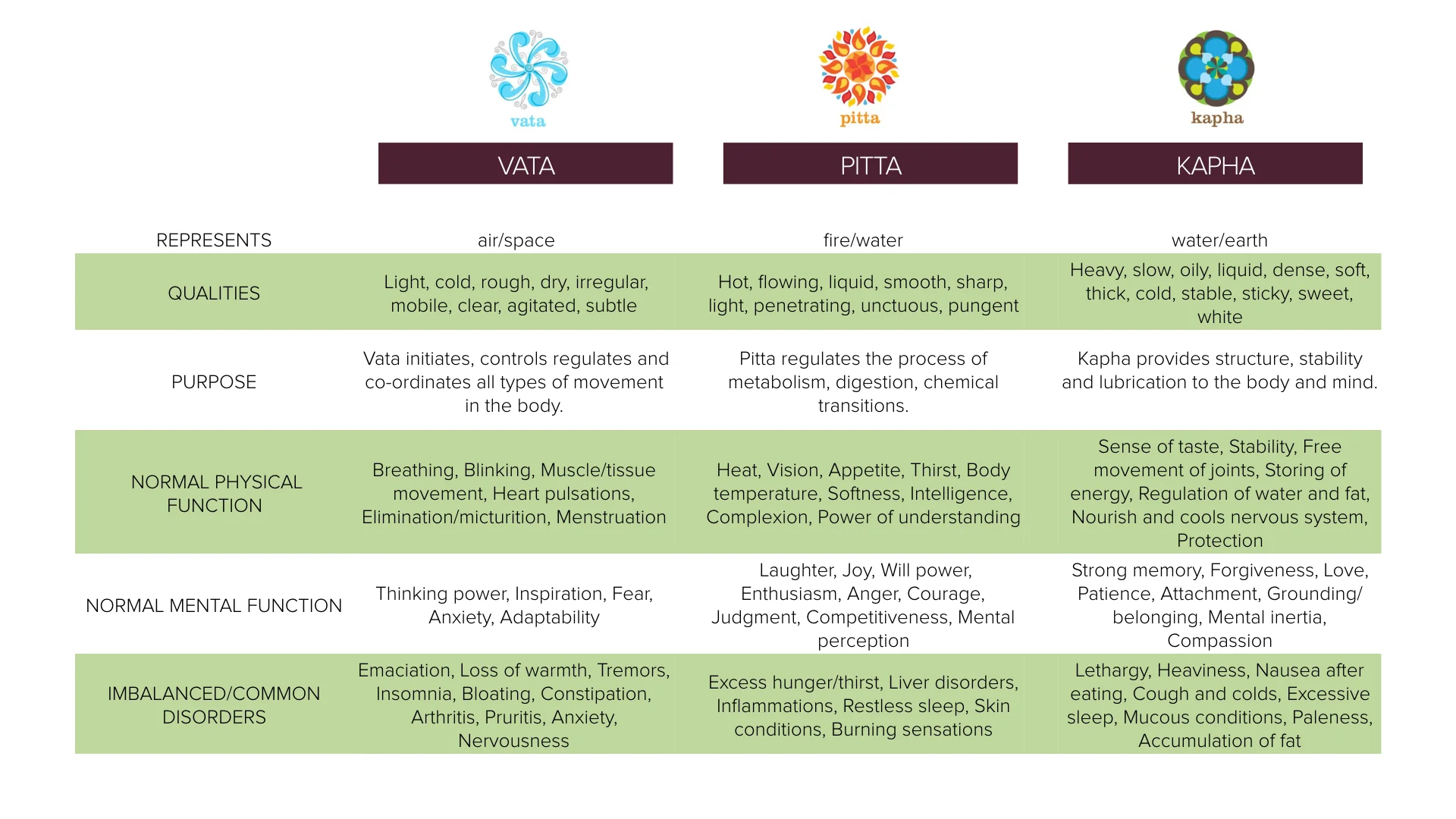
According to Ayurvedic medicine, the five elements of nature, space, air, fire, water and earth, combine to form three fundamental bioenergetic principles known as the doshas.
Vata governs movement, circulation and communication.
Pitta governs digestion, metabolism and transformation.
Kapha provides structure, stability and nourishment.
We each possess a unique balance of these doshas, known as our prakruti, or natural constitution. When this balance is disturbed, known as vikruti, it can contribute to ill health according to Ayurvedic principles.
Understanding these patterns is central to Ayurvedic assessment and personalised treatment.
How can Ayurveda help you?
Ayurvedic medicine takes a holistic and individualised approach to health, considering the physical, mental and emotional factors contributing to an individual's condition.
Traditional Ayurvedic treatments may include herbal medicine, therapeutic treatments, personalised nutrition, lifestyle adjustments, yoga, meditation and restorative practices.
People seek Ayurvedic consultations for a wide range of concerns, including:
Digestive problems, including bloating, constipation and IBS
Stress, fatigue and sleep disturbances
Women's health, menopause and midlife changes
Joint discomfort and stiffness
Weight management and metabolic wellbeing
Rejuvenation, vitality and healthy ageing
Ayurveda recognises that two people experiencing similar symptoms may require very different treatment approaches, depending on their constitution, digestive strength, lifestyle and underlying imbalances.
Treatment is individualised, and effectiveness and suitability depend on the condition and intervention.
Agni (Digestion): The Foundation of Ayurvedic Health
In Ayurveda, Agni refers to our digestive and metabolic fire, responsible for transforming food into nourishment and supporting healthy bodily functions.
When Agni is balanced, digestion, assimilation and elimination are supported. When disturbed, Ayurveda associates it with the accumulation of Ama, traditionally understood as improperly digested or metabolised material.
Restoring digestive balance is therefore a central principle of Ayurvedic treatment, with particular attention to food choices, eating habits, daily routines and individual constitution.
Experience Ayurveda for Yourself
Understanding your unique constitution is the first step towards a more personalised approach to health. Ayurveda offers a wealth of knowledge to help you recognise imbalances, address their underlying causes and make informed choices for lasting wellbeing.
For individual Ayurvedic assessment and treatment, explore my Ayurvedic Health Consultations in London and online.